Rajesh Ram’s Kaghaz Ki Kashti – A Childhood Cast in Bronze
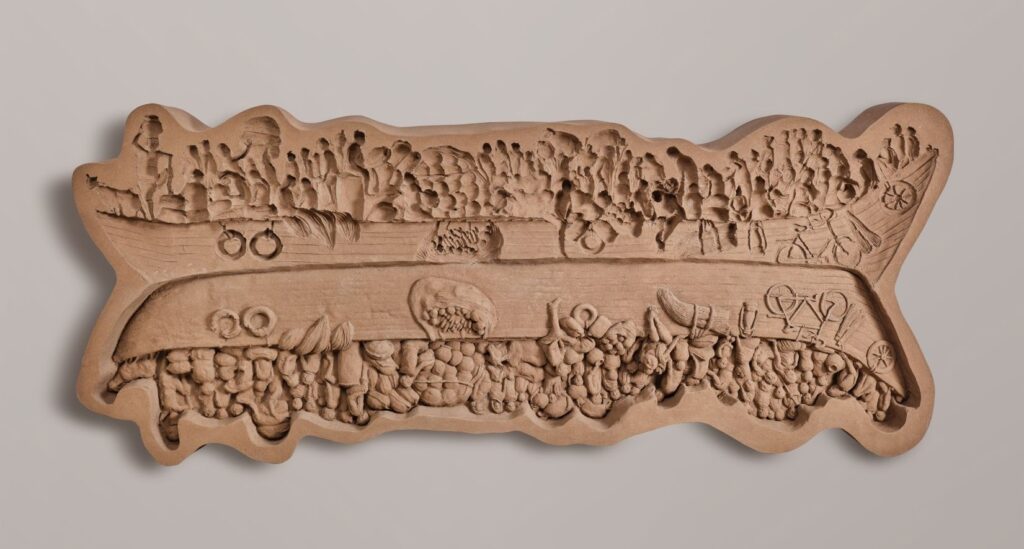
In Kaghaz Ki Kashti, Rajesh Ram turns the stuff of childhood—rivers, birds, trees, clay and village stories—into an elegiac sculptural language of memory, migration and belonging.


Loading...
In Kaghaz Ki Kashti, Rajesh Ram turns the stuff of childhood—rivers, birds, trees, clay and village stories—into an elegiac sculptural language of memory, migration and belonging.

A paper boat is an unlikely thing to carry a childhood. It is too fragile to survive a journey, yet for generations it has been entrusted with rivers, monsoons and the limitless geography of a child’s imagination. For sculptor Rajesh Ram, it has become something more: a metaphor for memory itself.
At Bihar Museum, Kaghaz Ki Kashti – Retracing Memories of Boyhood brings together a substantial selection of Ram’s sculptures, returning him to the landscape that shaped his artistic vocabulary. Presented by Palette Art Gallery in collaboration with Bihar Museum, the exhibition opens on August 7 and runs until September 7.
Ram’s childhood began in a village in Jharkhand, where sculpture was not an academic discipline but part of the rhythms of everyday life. He watched local artisans mould clay deities for religious festivals, absorbing the gestures and possibilities of modelling long before he entered Patna Art College. That early intimacy with clay, craft and oral traditions continues to surface in his work.
His sculptures are populated by familiar figures and forms: children, birds, trees, boats and rivers. But these are not merely nostalgic recollections of rural India. In Ram’s hands, a child balancing on a branch can suggest the precariousness of growing up; a bird can become a shorthand for freedom; a boat, for departure, aspiration or the inevitability of change.
Bronze is his principal medium, accompanied by wood, terracotta and mixed media. The permanence of these materials creates an intriguing tension with the memories they hold. Childhood is fleeting; bronze is not. A passing moment becomes a fixed form.
That tension gives the exhibition its contemporary edge. Beneath the apparent simplicity of Ram’s imagery lies a more complicated story about a changing rural landscape. Migration, ecological anxiety, disappearing traditions and questions of belonging sit quietly alongside the folklore and agricultural life that inform his work. The village is remembered, but it is also being reconsidered.
There is little sentimentality in the way Ram approaches memory. Instead, he seems interested in what memory edits, preserves and transforms. The stories handed down through generations become visual fragments; everyday experiences become symbols; personal history begins to look surprisingly universal.
The exhibition is also a homecoming of sorts. Bihar was where Ram received his formal artistic education, making the presentation at Bihar Museum a return not simply to a region, but to an important chapter in his evolution as an artist.
“Every sculpture carries a memory, a story and a connection to the place that shaped me,” says Ram. It is an apt description of a body of work in which biography is never far from the surface, even when the subject appears to be a simple boat, a bird or a child.
Perhaps that is the enduring charm of Kaghaz Ki Kashti. It begins with the smallest things and lets them drift towards larger questions. What happens to the places we leave behind? Which childhood memories survive adulthood? And can art hold on to a world that is slowly changing?
Ram’s paper boats may not be built to cross an ocean. But they carry enough memory to make the journey.
--
Written by Shouvik Sarkar
Set amidst priceless artwork including a mural by Anjolie Ela Menon, VARQ develops its guests a sen...
Kanyakumari is the city in Tamil Nadu of India and is perfectly at the southern tip of India. The c...
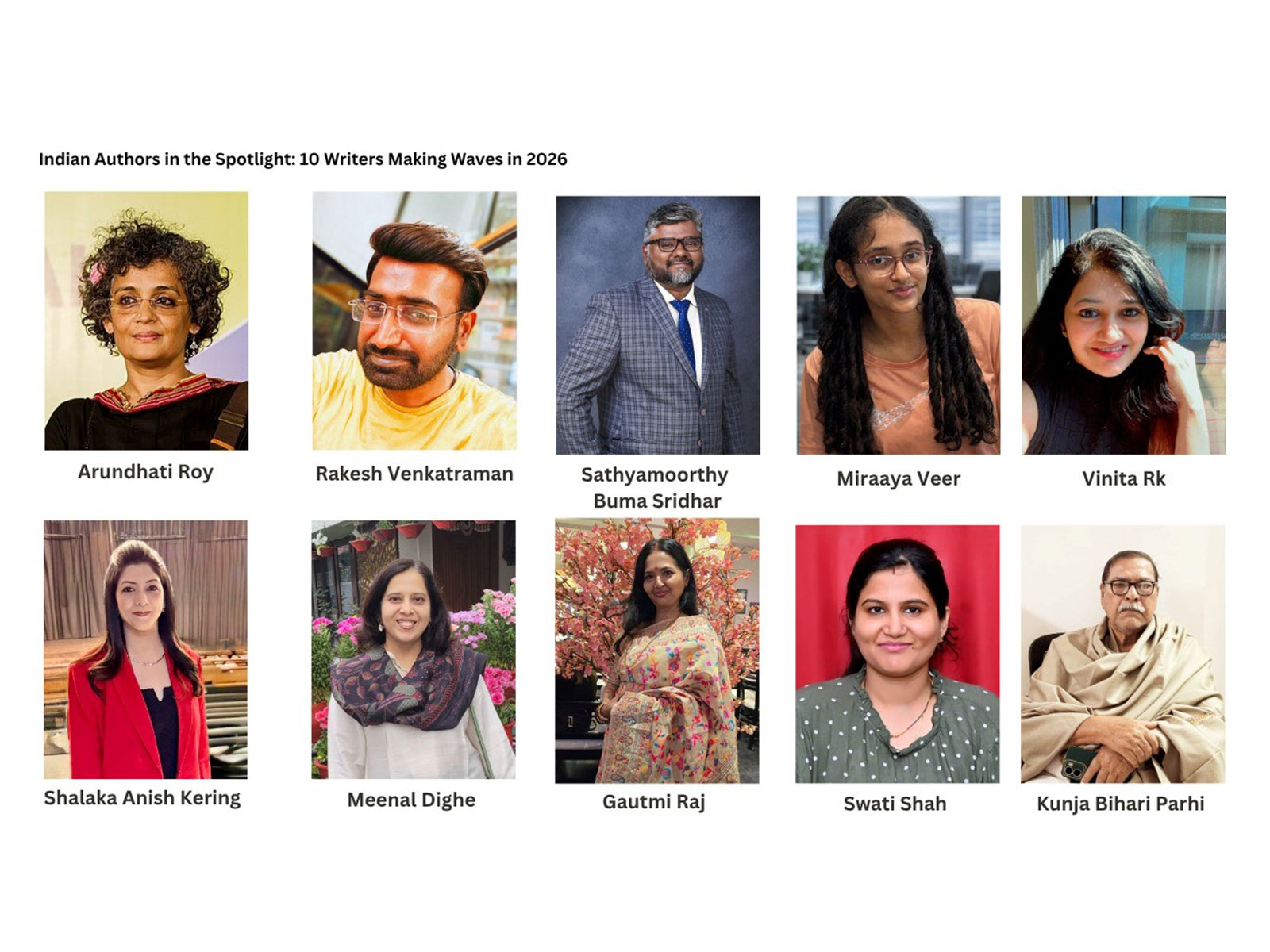
Indian literary landscape in 2026 is vibrant, diverse and constantly evolving, shaped by voices tha...